
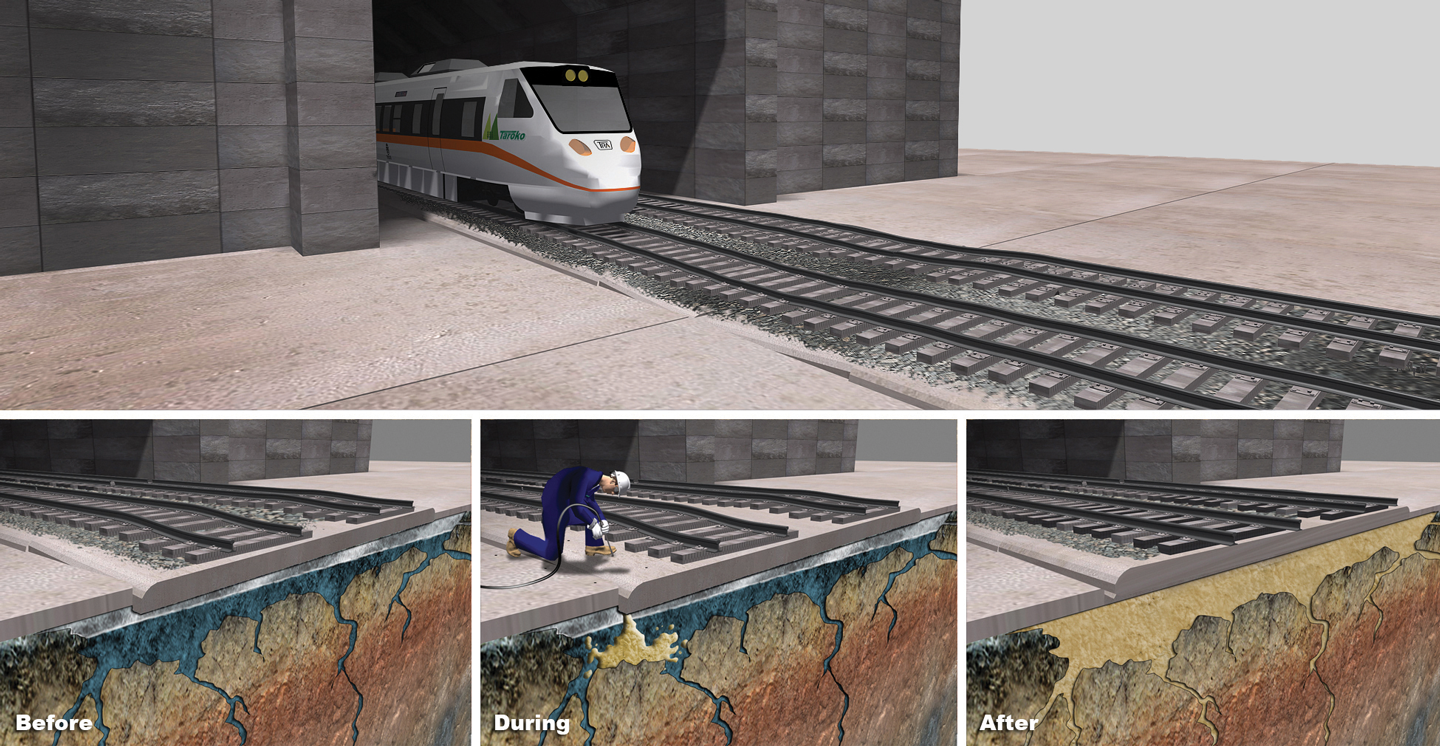
The Polymer Foam Lifting Process:
Step 1: Assess and Prepare
Determine cause of settling, explain scope of work to the client, protect surfaces, drill holes.
Step 2: Strengthen and Lift
Inject enough foam to stabilize soil, then inject in short bursts to achieve desired lift.
Step 3: Clean Up and Review
Clean the surface and review site with client to ensure their satisfaction.
Fact: One Square Foot of AP Lift Foam Can Support Up to 14,00 lbs.
Why Does Concrete Settle?
Erosion
Poor drainage, improperly placed downspouts, leaking drain pipes, and broken water lines are common culprits.
Poor Compaction
When backfilling on a jobsite, the contractor is supposed to compact the backfill by driving over it with heavy equipment. However, this isn’t always done properly for one reason or another.
Biological Decay
Construction trash pits, buried trees, and other biodegradable materials all break down. Sometimes structures are built over these areas.
How Does Polymer Foam Help?
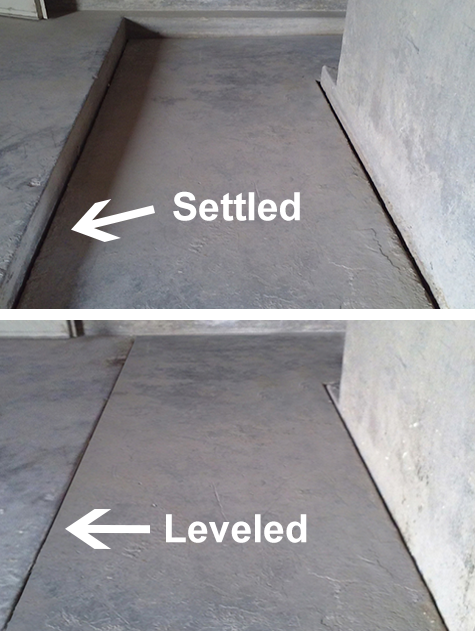
Lifts Slab Back to Level Height
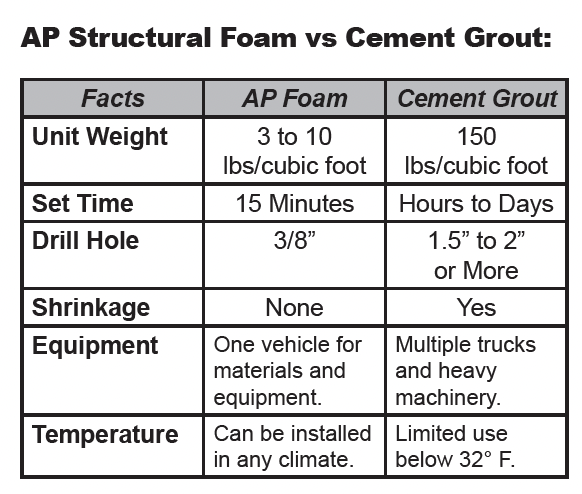
AP Lift foam allows contractors to raise slabs to within 1/8” of the desired height.
Reinforcing Eroded Areas
Polymer foam reacts with water to cure into a solid mass and reverse the erosion process.
Compacting Soil
AP Lift foam injection compacts loose soil to create a strong substrate.
Filling Voids Caused by Decay
Polymer foam fills voids before it cures, making it a great solution for instances of biological decay.
What Are the Results?
Use of Slab the Same Day as Repair
AP Lift foam cures to 90% full strength in 15 minutes. In most cases the site is ready for traffic right after clean up.
Support for Up to 14,000 lbs/Sq. Ft.
The AP Lift series of polymer foams support a range of 7,200 - 14,000 pounds per square foot.
Lift and/or Stabilization Lasting Decades
Alchatek structural foams are stronger than crystalline bedrock.