
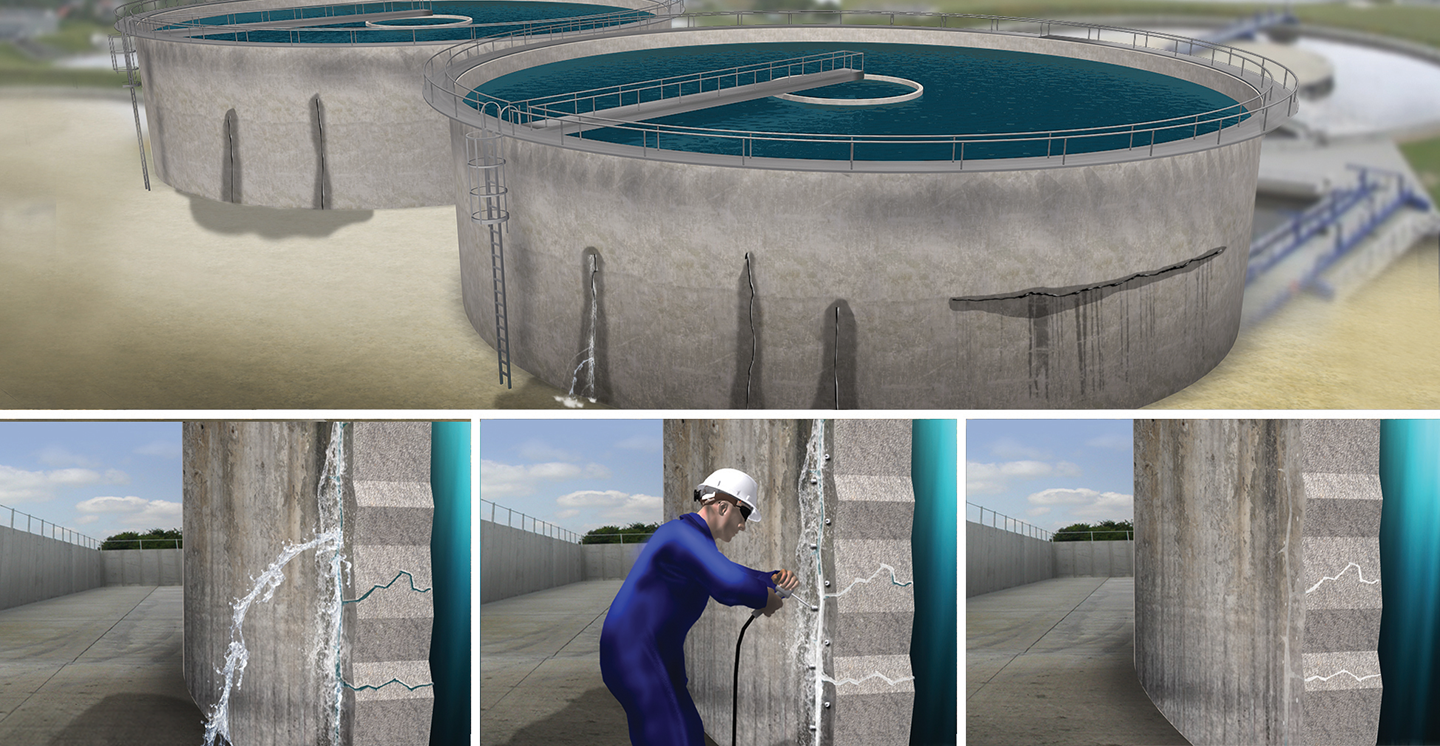
The Polyurethane Leak Seal Process:
For most leak seal products:
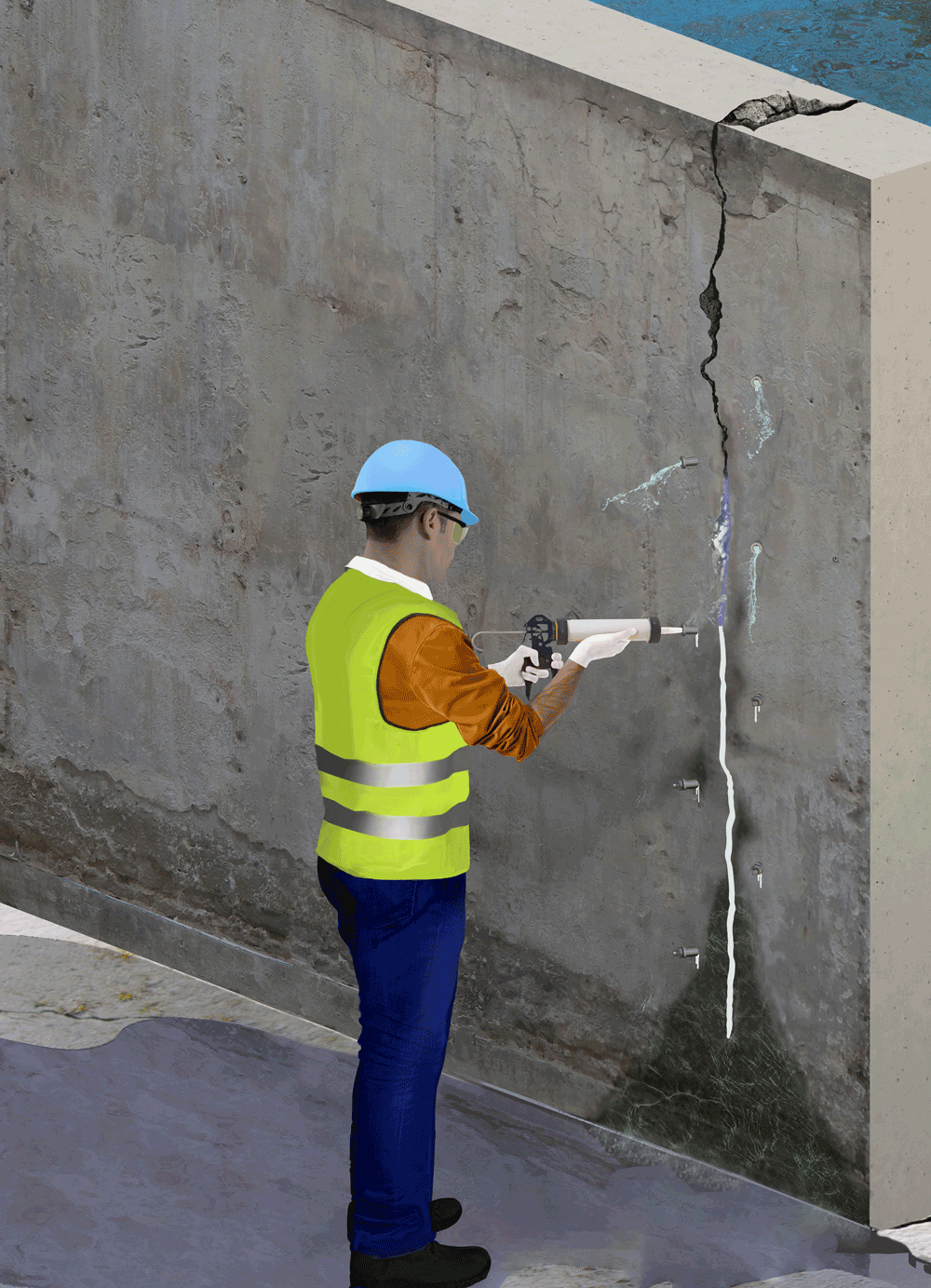
Step 1: Drill holes.
Step 2: Flush the holes.
Step 3: Install your injection port.
Step 4: Flush the crack.
Step 5: Inject the resin.
From hairline concrete cracks to gushing foundation leaks, virtually any defect can be sealed.
Why Does Concrete Leak?
- Imperfect Construction
Concrete construction is by no means a perfect science. New construction often requires leak seal treatment prior to putting infrastructure into service. - Weather and Wear
Concrete naturally decays over time. Exposure to hot temperatures, cold temperatures and the aging process can take a toll. - Unstable Soil
Unstable soil can undermine the integrity of concrete structures and cause cracks to form. Loose soil has four main causes: soil erosion, poor compaction, freeze/thaw cycles, and biological decay.
How Does Injection Resin Help?
- Water Activation
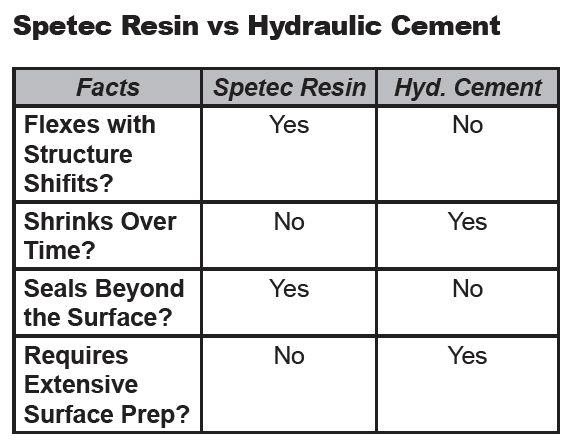
Leaking concrete structures can be permanently repaired with concrete crack injection by using a water activated flexible foam. - Pressure Injection
Pressure injection of these liquid polyurethane resins forces the material into leaking cracks, joints, and other defects. - Flexible, Watertight Seal
After the crack injection is complete, the polyurethane resin rapidly reacts with water to form a flexible, watertight seal.
What Are the Results?
From hairline concrete cracks to gushing foundation leaks, virtually any defect can be sealed with Alchatek polyurethane resins, optimized for sealing leaks.