
How Does Spray Foam Insulation Work?
August 21, 2026How Does Spray Foam Insulation Create An Air Seal?

If your home feels drafty in January and sticky by July, the culprit is often invisible. Air is moving through tiny gaps in your walls, attic, and floors without you ever noticing. Many older homes in Massachusetts and Rhode Island were built before modern efficiency standards, so these leaks are common across our service area. At Insulation & Energy Solutions, we help homeowners understand how spray foam works to solve this problem. Our team will help you fully understand what air sealing means, why it matters, and how the material forms a lasting barrier wherever it is applied.
What Air Sealing Really Means
Air sealing is the practice of closing off the small openings that let outside air enter your home and conditioned air escape. These gaps often hide around windows, rim joists, plumbing runs, and attic penetrations. When left open, they create air leakage that undermines even the best heating and cooling systems. Think of your house as a shell that protects the comfortable space inside. That shell, known as the building envelope, keeps conditioned air where it belongs. A weak envelope lets drafts win, while a tight one holds steady temperatures with far less effort.
Why Air Sealing Matters For New England Homes
Homes across Massachusetts and Rhode Island face two demanding seasons. Cold winters pull warm air out, and humid summers push moisture in. Both conditions strain your comfort and your equipment. A properly sealed thermal envelope addresses these challenges in practical ways.
- Steadier indoor temperatures: A continuous seal keeps warm air inside during winter and blocks heat and humidity in summer, so rooms feel more consistent. This reduces the hot and cold spots that frustrate many homeowners.
- Less strain on your systems: When conditioned air stops escaping, your furnace and air conditioner run less often. That lower demand supports the long life of your equipment.
- Better moisture control: Sealing the shell limits the damp outdoor air that can lead to mold and wood damage. This protection matters most in basements and attics.
How Spray Foam Insulation Creates An Air Seal
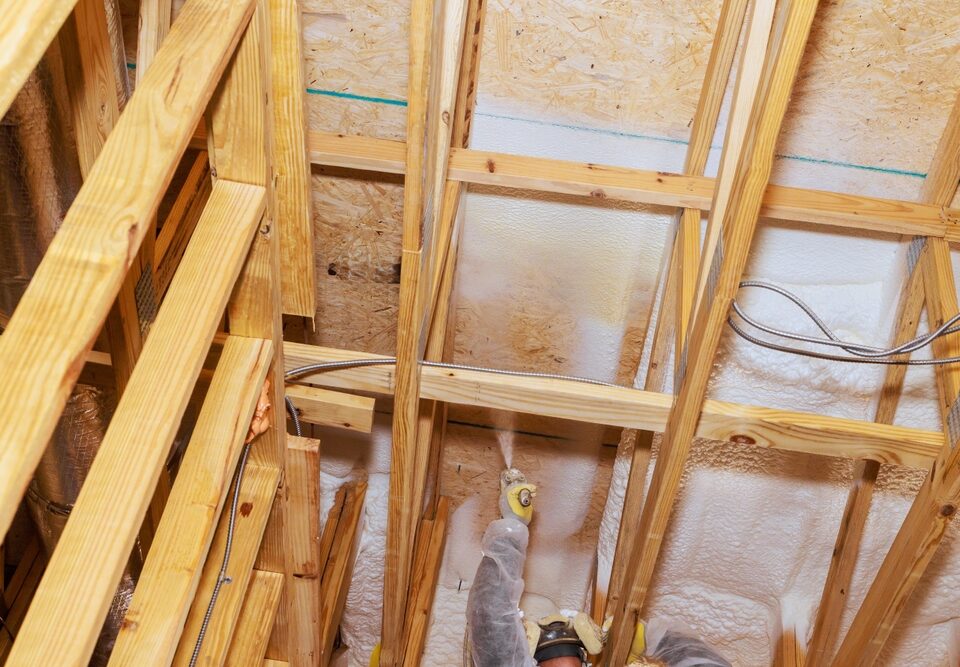
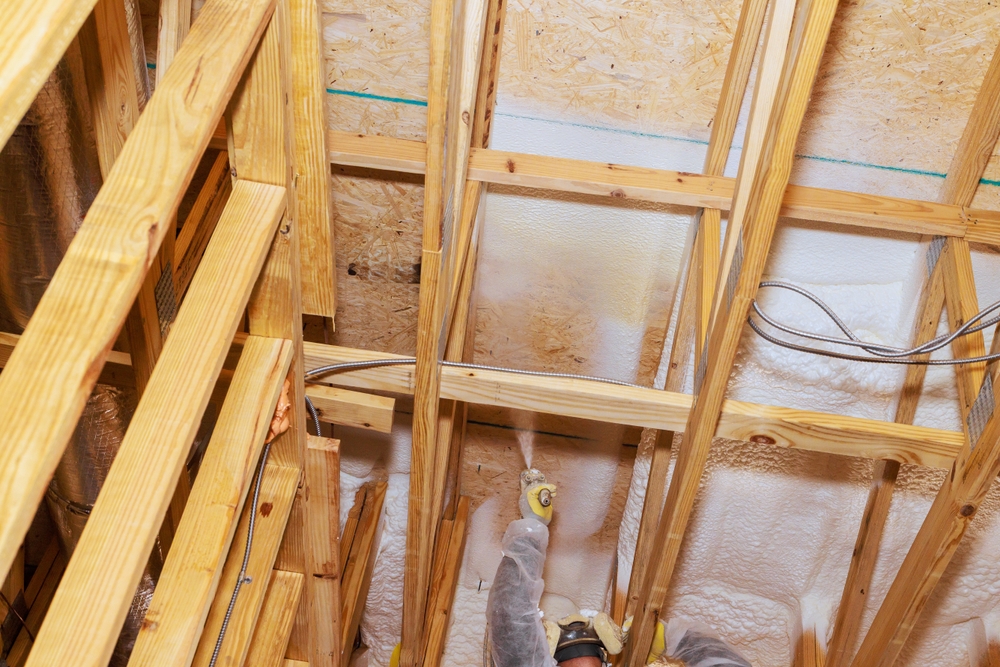
Spray foam insulation stands apart because it does two jobs at once. It insulates against temperature transfer and forms an air barrier in a single application. The material arrives as a liquid made from two components. When they combine at the spray tip, they react and expand within seconds. That rapid growth pushes the foam into cracks, corners, and gaps that other products simply pass over. Once the foam settles, it bonds directly to the surrounding surfaces and hardens into a solid layer. This bond is the key to weatherization. Rather than resting loosely inside a cavity, the foam becomes part of the structure and blocks the paths that air would otherwise follow.
Open Cell And Closed Cell Options
The right product depends on where it will be installed and what you want it to accomplish.
- Open cell spray foam: This lighter, softer foam expands generously and suits interior walls where sound control is a priority. It fills space well while staying flexible.
- Closed cell spray foam: This denser, firmer foam resists both air and moisture, making it a strong choice for attics, basements, and rim joists. It delivers a rigid, dependable barrier in demanding spots.
Building A Tighter, More Comfortable Home With Insulation & Energy Solutions
A well sealed home starts with careful assessment and precise application. We inspect your property, identify where air escapes, and recommend the approach that fits your goals. Our team completes each project with attention to detail and respect for your home. Whether you live in Holbrook, MA, Pawtucket, RI, or a nearby community, we are ready to help you build a more comfortable and efficient space. Call us at 781-926-3030 to talk through your project and next steps.